
Related Posts

“You only find out who is swimming naked when the tide goes out.”
— Warren Buffett
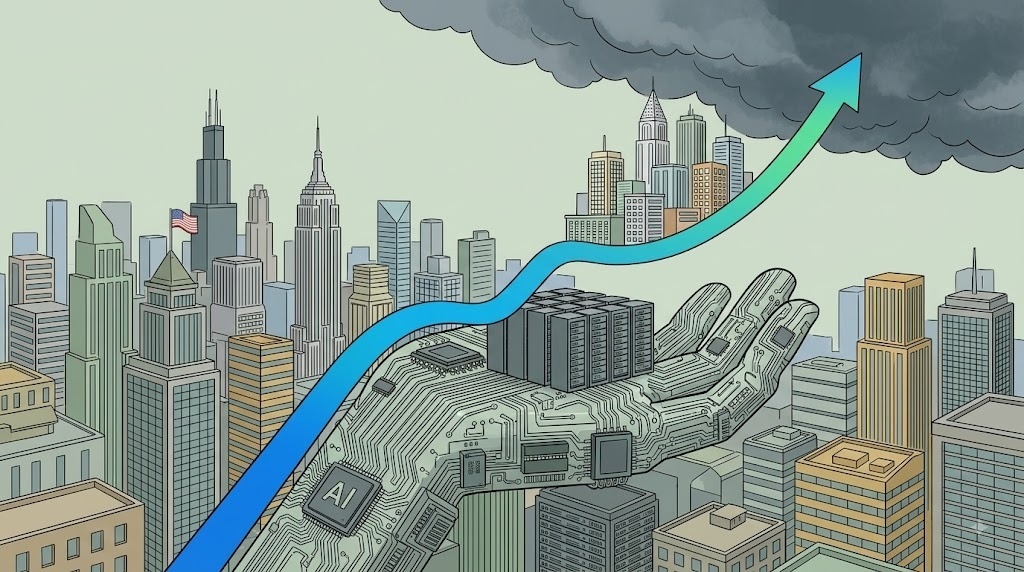
For years, Wall Street had been riding a rising tide, powered in large part by America’s housing boom. Lehman Brothers went aggressively into that market.
Then the tide turned.
On 15 September 2008, Lehman Brothers filed for bankruptcy with nearly $639 billion in assets. A 158-year-old institution that had survived wars, recessions and market crashes could no longer find the funding it needed to keep operating.
How did one of Wall Street’s biggest institutions reach this point? The answer was not one bad trade or one disastrous quarter. To understand why Lehman Brothers collapsed, we first need to understand the boom that encouraged it to take those risks.
How the Housing Boom Set the Stage
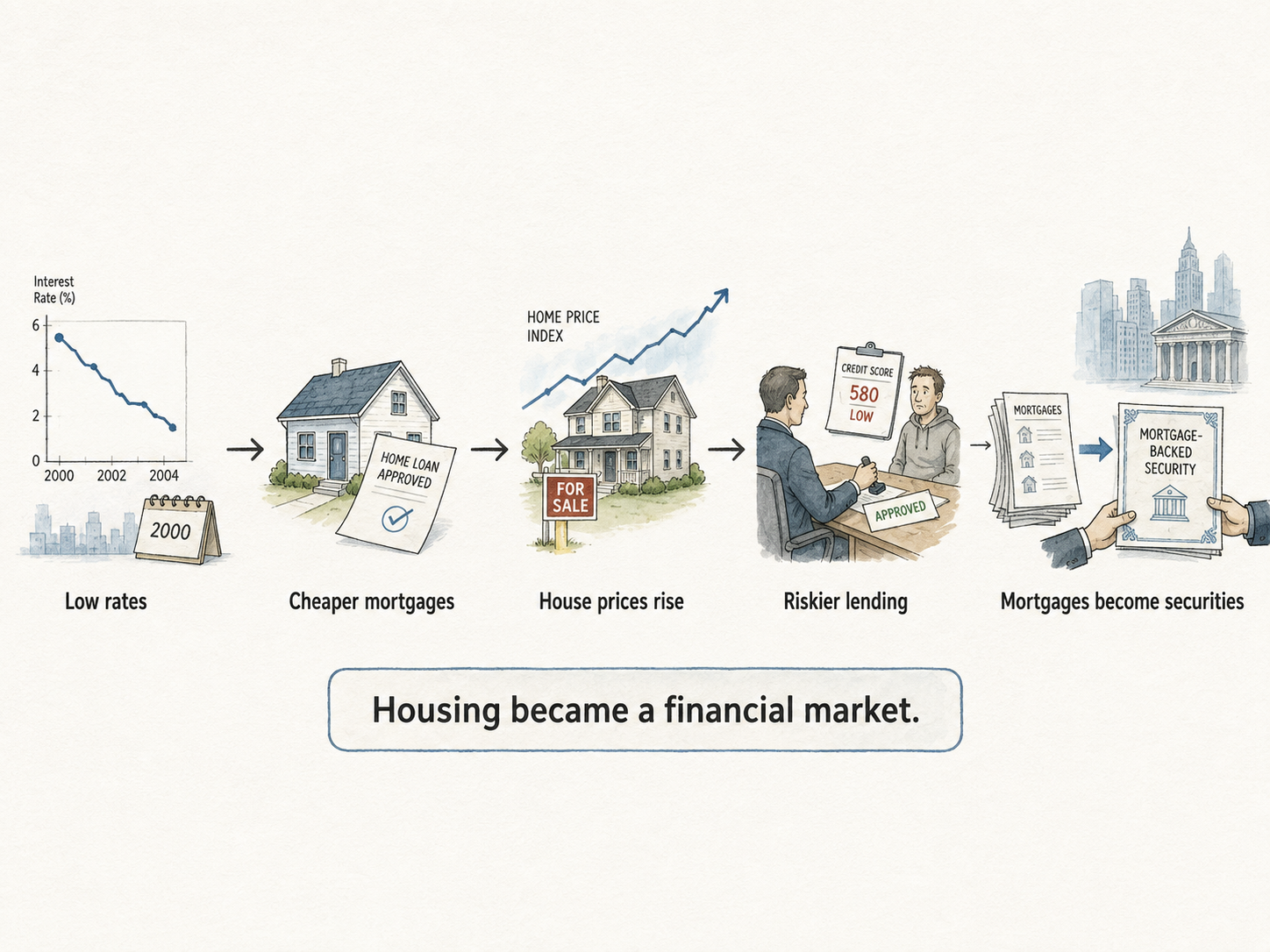
In the early 2000s, borrowing in the US became unusually cheap. After the dot-com crash and the economic shock following 9/11, interest rates were pushed sharply lower. Mortgages became more affordable and demand for homes increased.
As house prices kept rising, a powerful assumption took hold: property prices would continue to go up. That belief changed behaviour across the financial system. Lenders became more comfortable giving mortgages to borrowers with weaker credit profiles because rising property values provided a sense of protection.
Wall Street found another opportunity. Mortgages could be bundled together into mortgage-backed securities and sold to investors looking for returns. The more mortgages lenders created, the more securities investment banks could package and sell. Housing was no longer only about families buying homes. It had become a huge financial market. And Lehman wanted a much bigger share of it.
Lehman’s Growing Bet on Housing
Lehman expanded across the mortgage business, acquiring lenders such as Aurora Loan Services and BNC Mortgage. This gave the firm access to a growing stream of home loans that could be packaged into securities and sold to investors.
For several years, the strategy worked. House prices kept rising, demand for mortgage products remained strong and the business generated significant profits. But Lehman was not simply earning fees by moving mortgages through the system. It was also keeping large amounts of mortgage and real-estate exposure on its own balance sheet. And much of that exposure had been financed with borrowed money.
As long as property prices remained strong, that structure looked manageable. Once the housing market began moving in the opposite direction, the same strategy would become far more dangerous.
When the Housing Market Turned
By 2006, the conditions supporting the boom were weakening. Interest rates had risen, mortgage payments were becoming more difficult for some borrowers, and house prices were no longer climbing as they had before.
That created a problem for borrowers who had depended on rising home values to refinance or sell their properties. Mortgage defaults began increasing, particularly among subprime borrowers. Investors responded by becoming less willing to buy securities backed by those loans. Their prices fell, and many mortgage-related assets became increasingly difficult to sell. Lehman was now stuck holding large amounts of precisely the assets investors were trying to avoid.
In 2007, it closed BNC Mortgage, its subprime lending business, but closing the lender could not remove the risks already sitting on Lehman’s balance sheet. And because those assets had been heavily financed through borrowing, falling prices were about to expose another weakness: leverage.
When Losses Became a Funding Problem
Lehman had not purchased all of those assets using its own capital. Borrowing had allowed the firm to build a much larger balance sheet, which worked extremely well while asset prices were rising.
But once prices started falling, leverage began working in the opposite direction.
With high leverage, even a relatively small fall in asset values could consume a much larger share of Lehman’s own capital. Investors therefore started asking whether the firm could absorb further losses.
There was another complication. Lehman relied heavily on short-term funding to keep operating. That meant lenders and other financial institutions had to remain willing to keep doing business with Lehman. The weaker its balance sheet looked, the more cautious those lenders became. And as funding became less reliable, Lehman had fewer options for dealing with the assets already losing value.
This combination of falling asset values, heavy leverage and dependence on short-term funding became central to the reasons behind the Lehman Brothers collapse.
Every solution Lehman needed now depended on someone still trusting Lehman.
How Lehman Brothers Collapsed in 2008?
That problem became much more serious after Bear Stearns nearly collapsed in March 2008 and was sold to JPMorgan Chase with government support.
Bear Stearns gave markets a frightening template for what could happen when confidence in an investment bank disappeared. Attention quickly shifted to other highly leveraged firms.
The question became simple: who was next?
Lehman found itself under intense scrutiny. Lehman Brothers stock fell sharply, investors questioned the strength of its balance sheet and raising fresh capital became increasingly difficult.
The firm now faced another challenge: it had to convince markets that it was reducing risk. One controversial practice used during this period was Repo 105, which allowed Lehman to temporarily remove certain assets and liabilities from its reported balance sheet, making its leverage appear lower around reporting dates. Repo 105 did not create Lehman’s mortgage losses. But it later raised serious questions about how clearly the firm had presented the risks it was carrying.
By September, time was running out. Lehman Brothers CEO Richard Fuld and the firm’s management searched for investors and potential buyers, but no rescue could be completed. Lehman needed capital and continued access to funding at precisely the moment when markets were least willing to provide either. By the end of that final weekend, there was no buyer, no fresh capital and no rescue deal. Lehman had run out of options and it filed for Chapter 11 bankruptcy.
What began as an aggressive bet on a rising housing market had become a chain reaction: falling asset values weakened the balance sheet, leverage magnified the damage, lenders pulled back and the liquidity Lehman needed to survive disappeared. The consequences would now move far beyond Lehman itself.
The Impact
On the day Lehman filed for bankruptcy, the Dow Jones Industrial Average fell 504 points, or about 4.4%, as fear spread across financial markets.
The shock quickly reached the banking system. Banks became reluctant to lend to one another, short-term funding tightened, and the Reserve Primary Fund, which held Lehman debt, fell below its $1 share value. This was significant because money-market funds were generally considered highly stable.
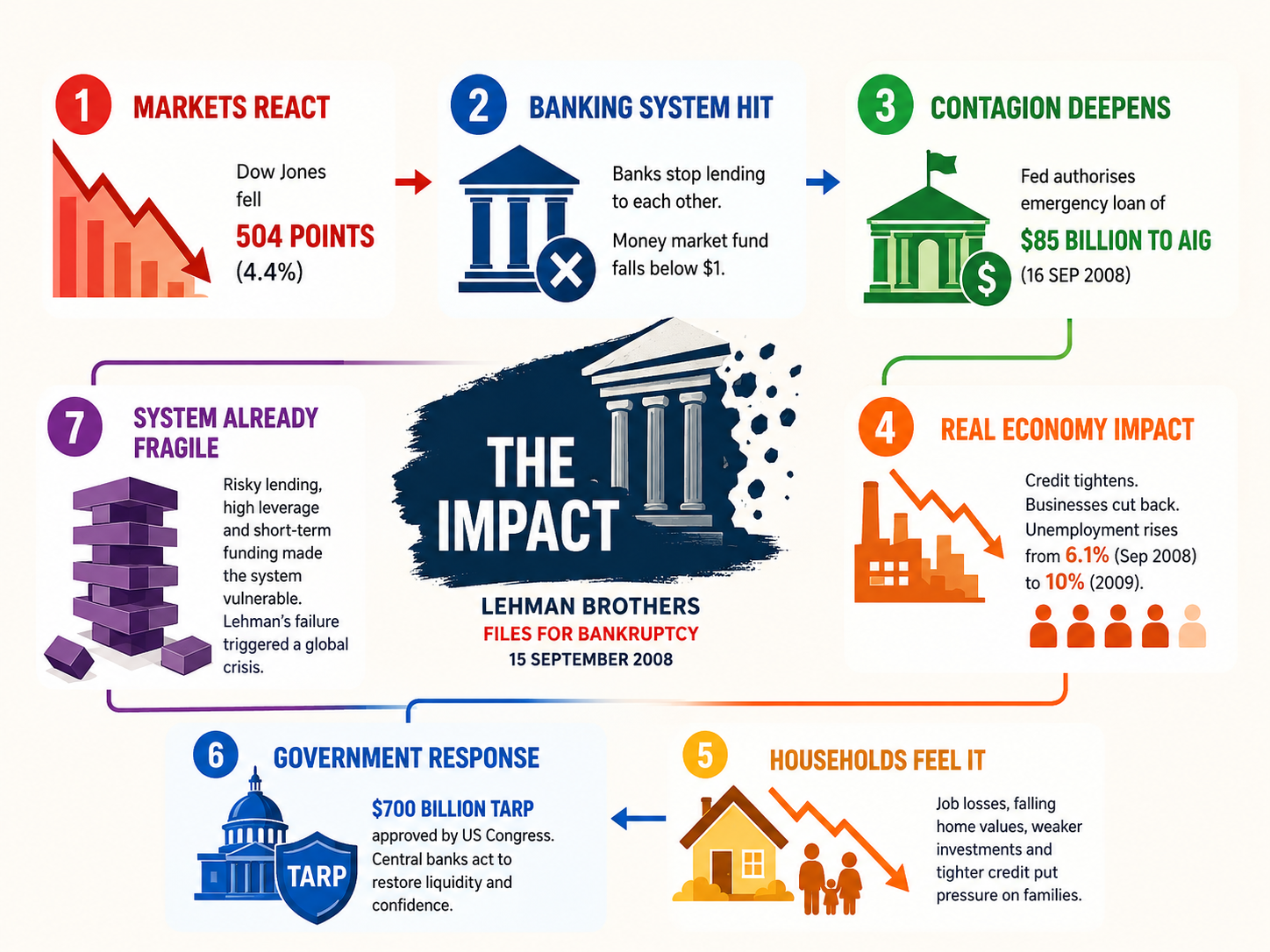
Just one day later, the Federal Reserve authorised an emergency loan of up to $85 billion to AIG, another major financial institution facing heavy losses linked to the housing market.
Soon, the crisis moved beyond Wall Street. Credit became harder and more expensive for businesses, investment slowed and companies began cutting jobs. US unemployment rose from around 6.1% in September 2008 to 10% in 2009.
The effects were now reaching households as well.
Job losses, falling home values, weaker investment portfolios and tighter credit put pressure on families across the economy.
Governments were forced to respond. In the US, Congress approved the $700 billion Troubled Asset Relief Program (TARP), while central banks around the world took steps to restore liquidity and confidence.
Lehman was not the only source of weakness in the financial system. Risky mortgage lending, high leverage and dependence on short-term funding had already made the system vulnerable. Lehman’s failure showed how quickly those weaknesses could develop into a much wider financial and economic crisis.
Conclusion
Lehman’s bankruptcy appeared sudden. The conditions that made it possible were not. They had been building for years, hidden by rising asset prices, easy funding and confidence that seemed permanent until it disappeared. That is what makes Lehman’s story worth remembering: risk often builds quietly long before the crisis becomes visible.
Behind every article is the SSEI Team, bringing together educators, finance professionals, and content specialists to make finance easier to understand.
View All Articles