
Related Posts
You find a loan that fits your budget, check the EMI, and think, “₹18,000 a month? I can manage that.”
But that one number can be misleading.
A lower EMI may simply mean that you are repaying the loan for much longer. Your monthly burden falls, but the total interest you pay can rise significantly. There may also be processing fees and other charges beyond the monthly instalment.
That is why understanding how to calculate EMI matters. It helps you compare not just what you pay every month, but what the loan may cost you in total.
What Is EMI?
EMI is the amount you generally pay every month to repay a loan over a specified period.
The EMI full form is Equated Monthly Instalment. Each instalment usually includes two components: repayment of the principal you borrowed and interest charged by the lender.
In a reducing-balance loan, the split between these components changes over time. During the initial months, a larger share of your EMI generally goes towards interest because the outstanding loan balance is higher. As that balance reduces, more of each payment starts going towards the principal.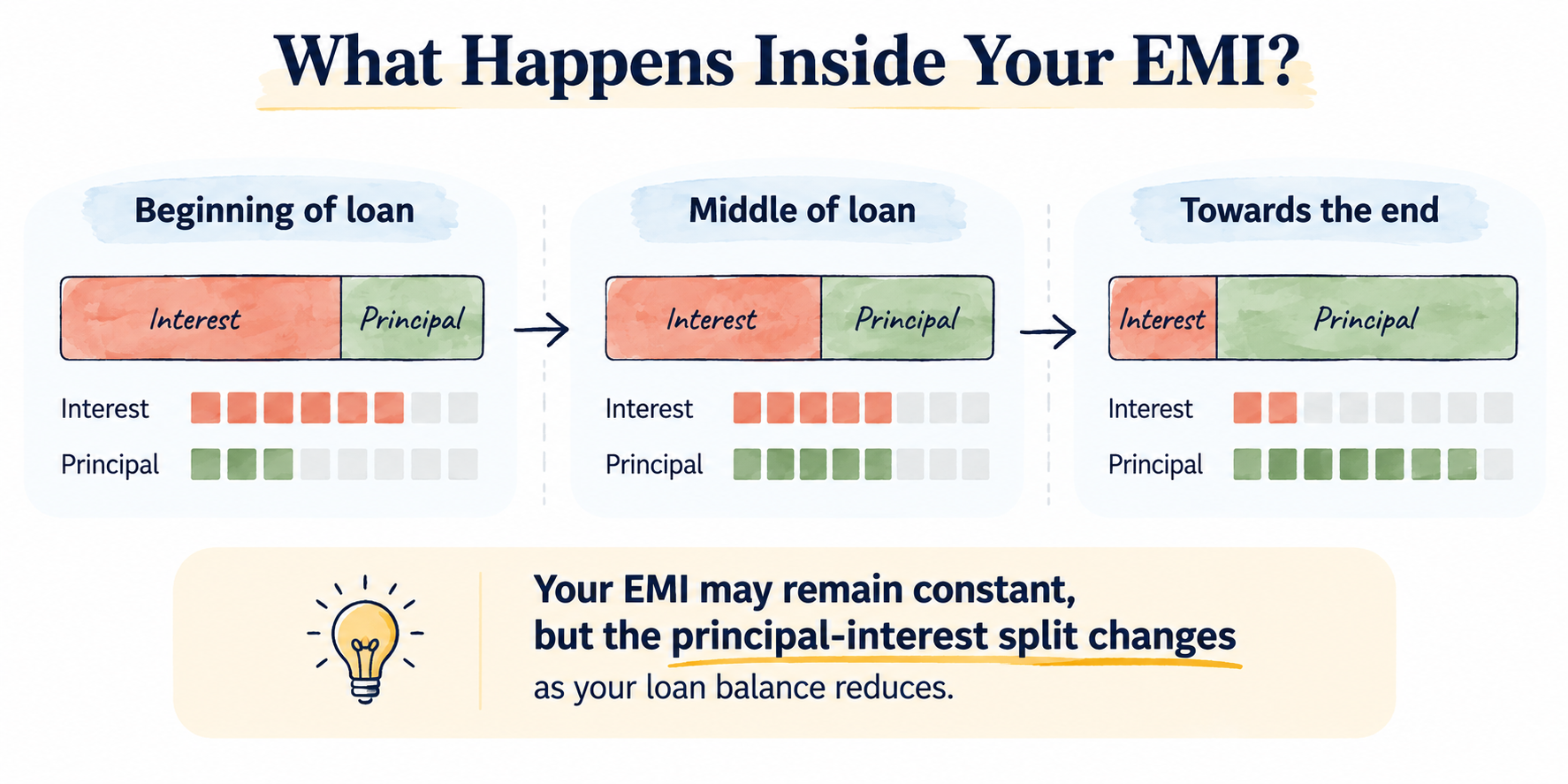
So, even when the EMI stays the same, what happens inside that payment changes through the loan tenure.
Why Can EMI Differ Across Banks?
The same loan amount and tenure can lead to different EMIs because lenders may offer different interest rates and loan terms.
Suppose you are comparing a ₹50 lakh home loan for 20 years.
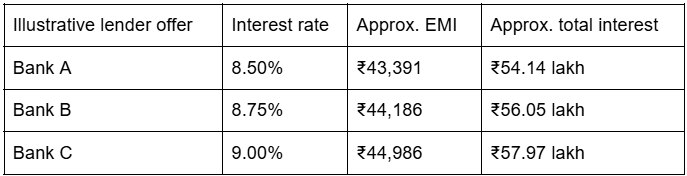
The monthly difference between these offers may not look dramatic, but over a long tenure, even a small change in the interest rate can add lakhs to the total borrowing cost.
The rate you are offered can also depend on factors such as your credit profile, income, loan type, tenure and the lender’s pricing policy.
So, when comparing lenders, do not look at the EMI alone. Compare the interest rate, total interest, tenure and applicable charges before deciding which loan is actually cheaper.
What Affects Your EMI?
Your EMI is mainly affected by three factors: the amount you borrow, the interest rate and the loan tenure.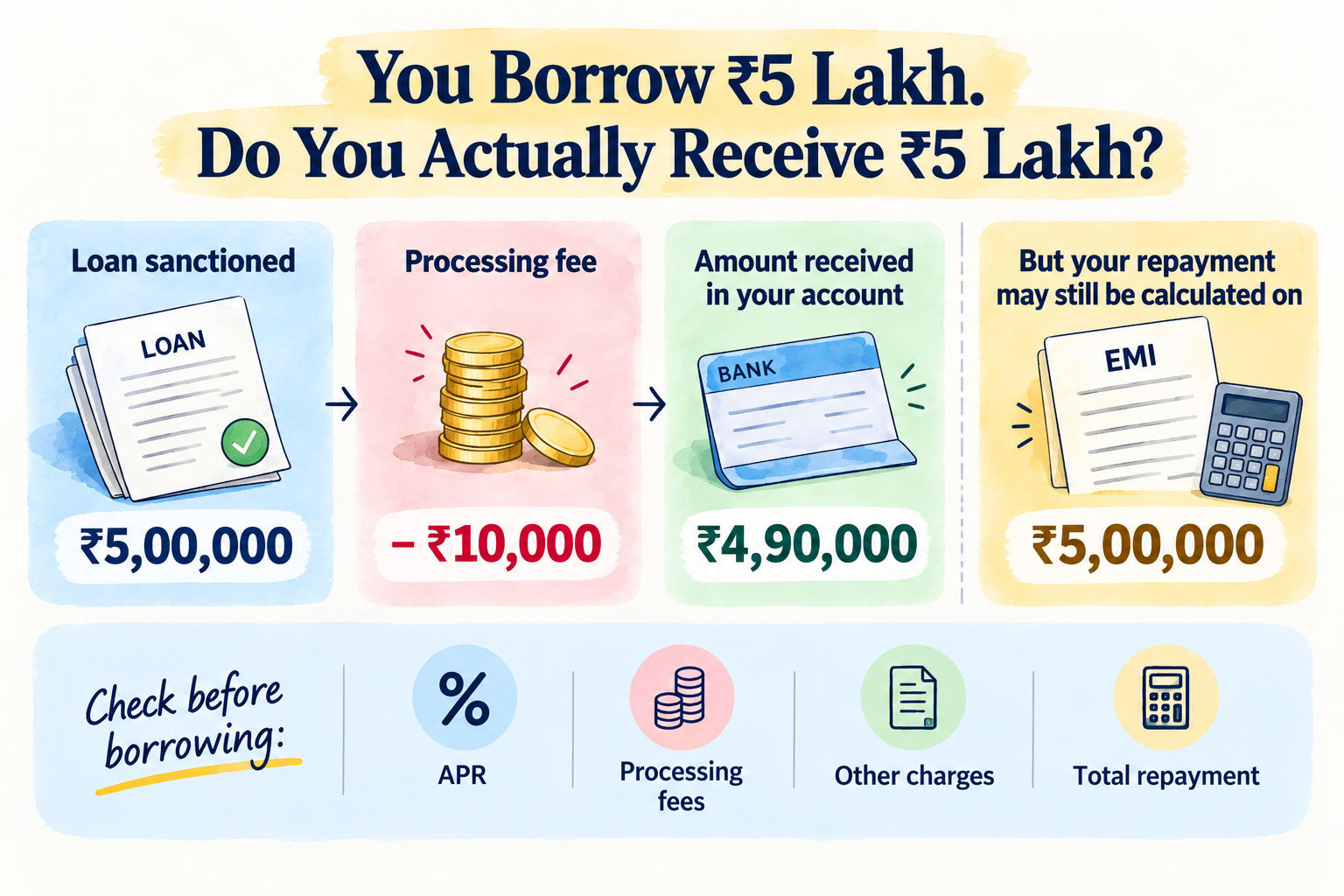
Loan Amount
The higher the amount you borrow, the higher your EMI will generally be if the interest rate and tenure remain unchanged.
A personal loan EMI calculator or car loan EMI calculator can help you compare different borrowing amounts before deciding how much debt your monthly budget can comfortably handle.
Interest Rate
A higher interest rate increases both your EMI and total borrowing cost.
For example, on a ₹50 lakh home loan for 20 years, the EMI at 9% is approximately ₹44,986. At 8.75%, it falls to around ₹44,186.
The difference is only about ₹800 a month, but over the complete tenure, the lower rate can reduce total interest by roughly ₹1.92 lakh.This is why comparing rates through a home loan EMI calculator can be useful before choosing a lender.
So, how does loan tenure affect your EMI?
A longer loan tenure usually reduces your EMI but increases the total interest you pay.
Consider the same ₹10 lakh loan at 10% interest: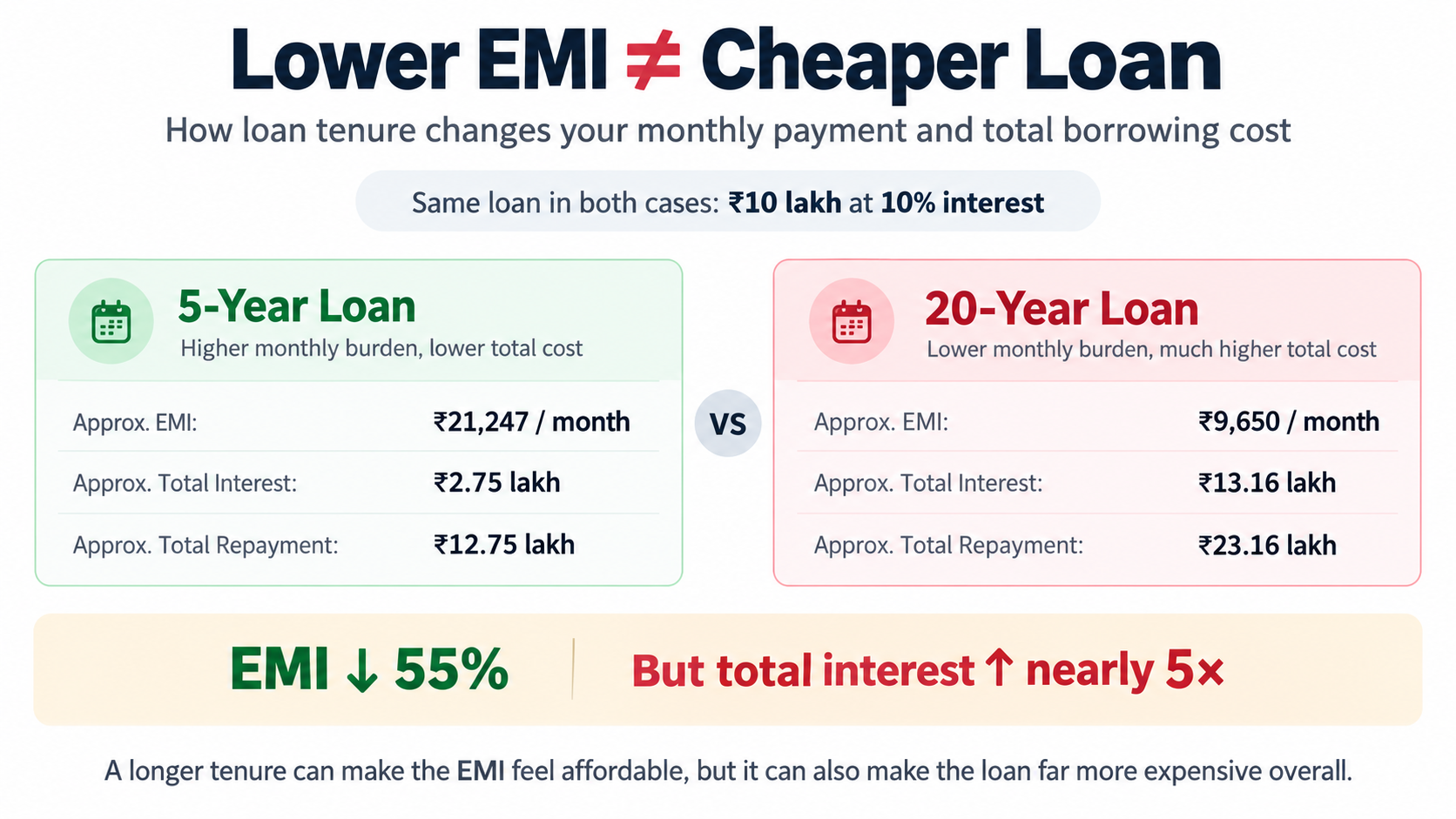
Stretching the loan from five years to twenty years cuts the monthly EMI by more than half.But the total interest rises from approximately ₹2.75 lakh to ₹13.16 lakh.
That is why the better question is not simply:
“What is the lowest EMI available?”
It is: “What EMI can I comfortably afford without unnecessarily extending the loan?”
Is EMI the Full Cost of a Loan?
No. EMI does not always show the complete cost of borrowing.
Your EMI mainly reflects principal repayment and interest. Depending on the loan, you may also have processing fees, insurance or other disclosed charges.
Suppose a lender sanctions a ₹5 lakh personal loan and deducts a ₹10,000 processing fee before disbursing the amount.You receive ₹4.90 lakh, even though repayment may still be based on ₹5 lakh.
This is why the Annual Percentage Rate (APR) and Key Facts Statement (KFS) are important.
The Reserve Bank of India’s KFS framework requires covered regulated entities to provide borrowers with key loan information, including APR and repayment details.So, before accepting a loan, look beyond the quoted EMI and check the applicable charges and total borrowing cost.
Look Beyond the Monthly EMI
An EMI tells you how much a loan may cost every month. It does not always tell you what the loan will cost in total.
Before borrowing, compare the EMI, tenure, interest rate, total interest, fees and APR together.Use an EMI calculator to test different scenarios, but make the final decision based on the complete cost of borrowing, not just the most comfortable monthly number.
To understand how borrowing history can affect future credit decisions, read CIBIL Score Explained: What Affects Your Credit Score.
Want to build stronger everyday money skills?
Explore Prudentia
Frequently Asked Questions
What does EMI mean?
EMI is the fixed amount you generally pay every month to repay a loan over a set period. It usually includes both principal and interest.
What is EMI full form?
EMI stands for Equated Monthly Instalment. It is the monthly payment made towards repaying a loan.
How much is 1 lakh EMI per month?
The EMI on a ₹1 lakh loan depends on the interest rate and loan tenure. For example, at 10% interest for 5 years, the EMI is approximately ₹2,125 per month.
How to check for EMI?
You can check your EMI using an EMI calculator by entering the loan amount, interest rate, and repayment tenure. The calculator will estimate your monthly EMI and total interest payable.
Behind every article is the SSEI Team, bringing together educators, finance professionals, and content specialists to make finance easier to understand.
View All Articles