
Related Posts

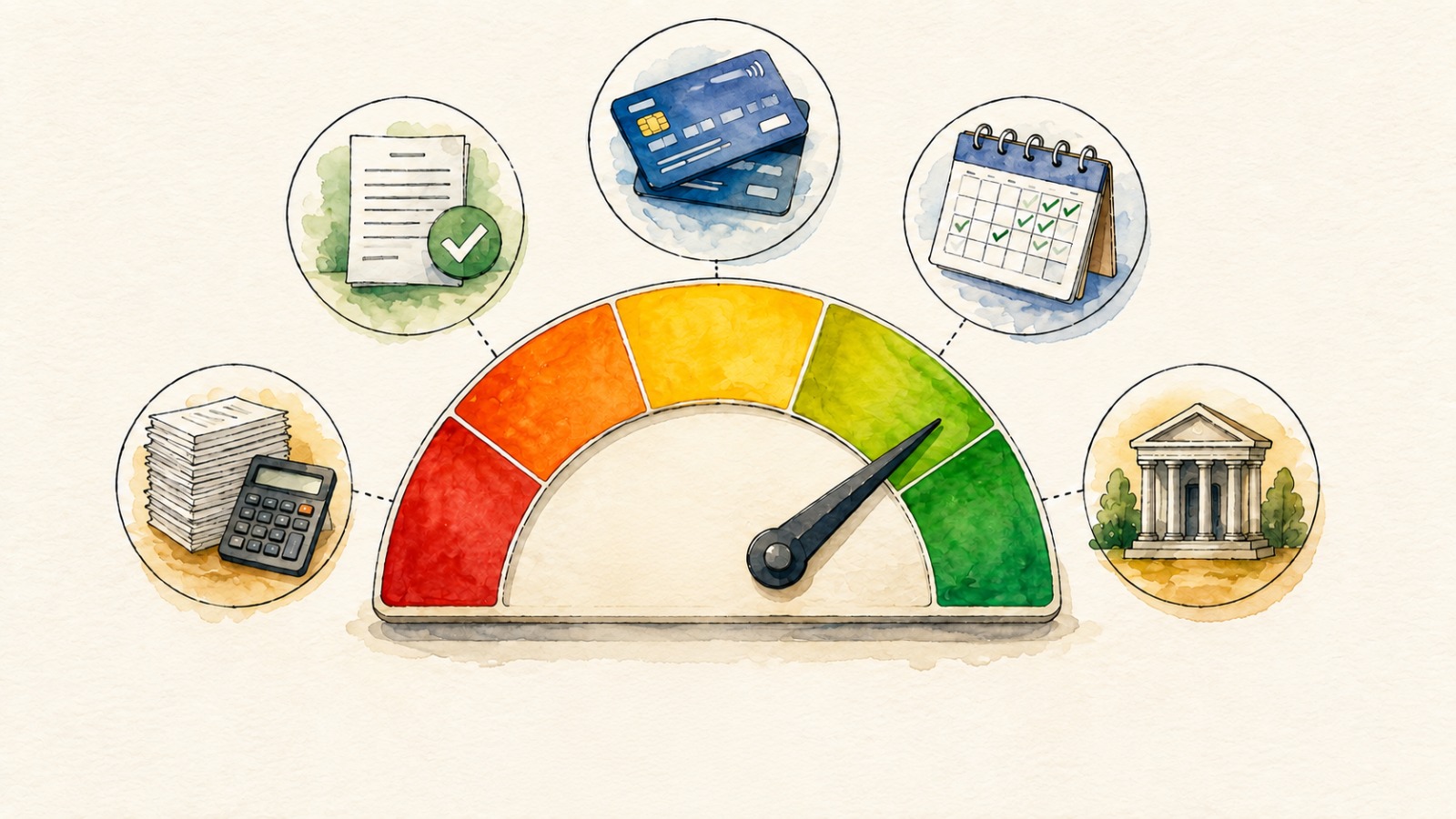
You have ₹5,000 a month to invest, open a mutual fund platform, and suddenly face terms like SIP, equity fund, direct plan and growth option. The difficult part is not starting the investment. It is understanding what you are actually choosing.
That is where investing in mutual funds through an SIP often causes confusion.
According to AMFI, an SIP allows you to invest a fixed amount in a mutual fund scheme at regular intervals, while SEBI defines mutual funds as pooled investments managed according to a scheme’s stated investment objective.
Simply put, the mutual fund is the investment, while SIP is the method you use to invest in it.
So, how does an SIP actually work once your money is invested?
Each SIP instalment is used to buy units of your chosen mutual fund scheme.
Suppose your SIP investment is ₹5,000 every month. On your SIP date, the ₹5,000 is used to buy units at the applicable Net Asset Value, or NAV.
Here is a simplified example:
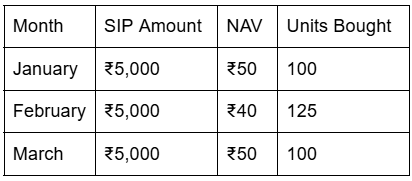
When the NAV is lower, the same SIP amount buys more units. When the NAV is higher, it buys fewer units.
However, a lower NAV does not mean a mutual fund is cheaper or better. NAV simply determines how many units your investment amount purchases. What matters for your eventual return is how the value of those units changes over time.
Your units represent a share of the scheme’s portfolio, which may hold shares, bonds or other securities. Their performance, income and scheme expenses ultimately affect the NAV and your returns.
What Actually Drives Your Mutual Fund Returns?
Your mutual fund returns mainly depend on how the securities held by the fund perform, along with the income earned and expenses charged by the scheme.
A mutual fund can generate returns through:
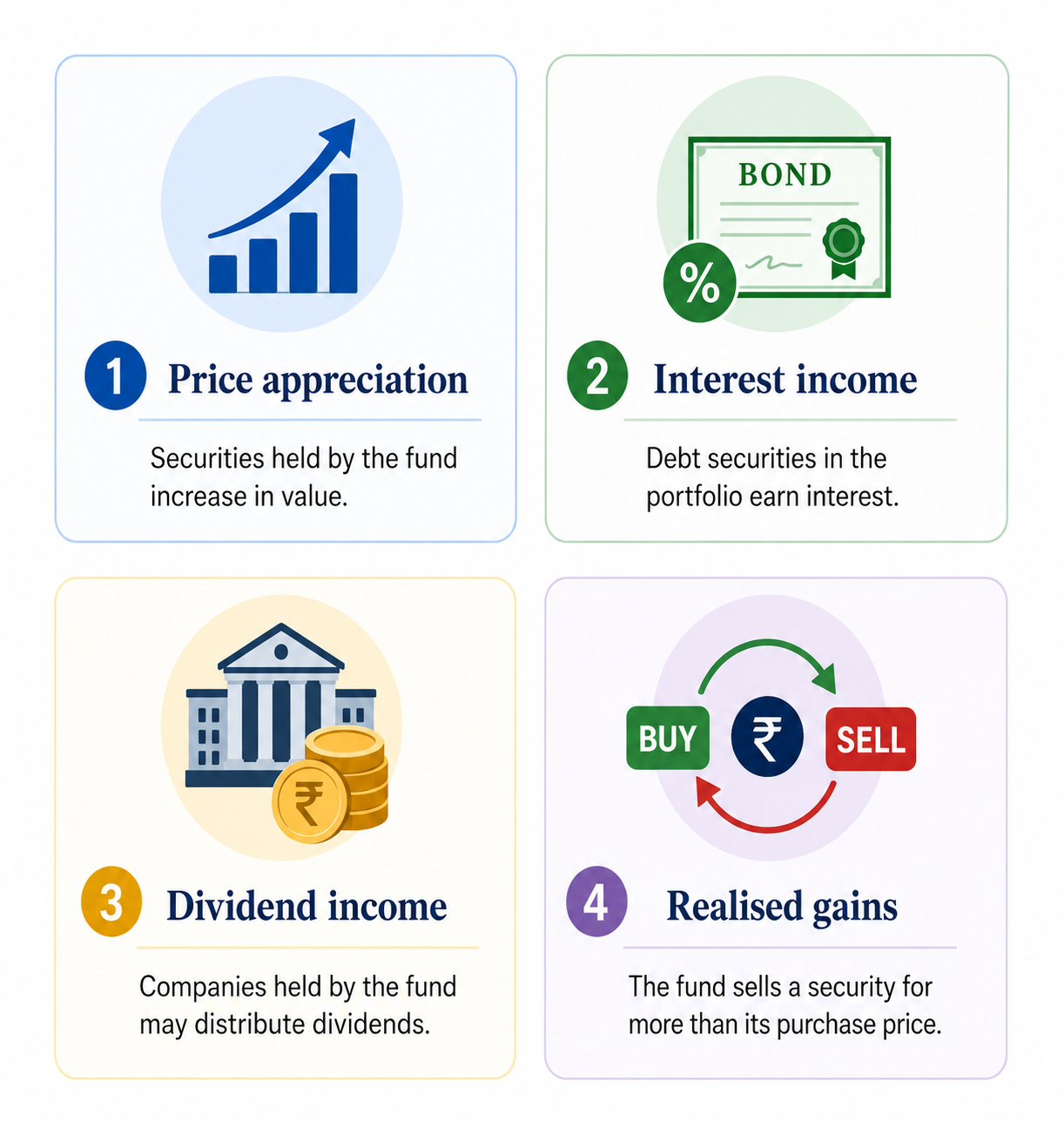
These factors are reflected in the scheme’s NAV after accounting for its liabilities and expenses.
That means the value of your investment can rise or fall depending on the underlying portfolio’s performance. Mutual fund returns are market-linked and are not guaranteed.
Since every SIP instalment is invested on a different date, returns are commonly measured using XIRR (Extended Internal Rate of Return), which calculates an annualised return while accounting for the timing of each investment.
Which Type of Mutual Fund Fits Your Goal?
If returns depend on what a fund owns, choosing a mutual fund also means choosing the kind of portfolio your money will enter.
SEBI classifies mutual fund schemes based on where and how they invest. That matters because different types of mutual funds can expose your money to very different risks and return drivers.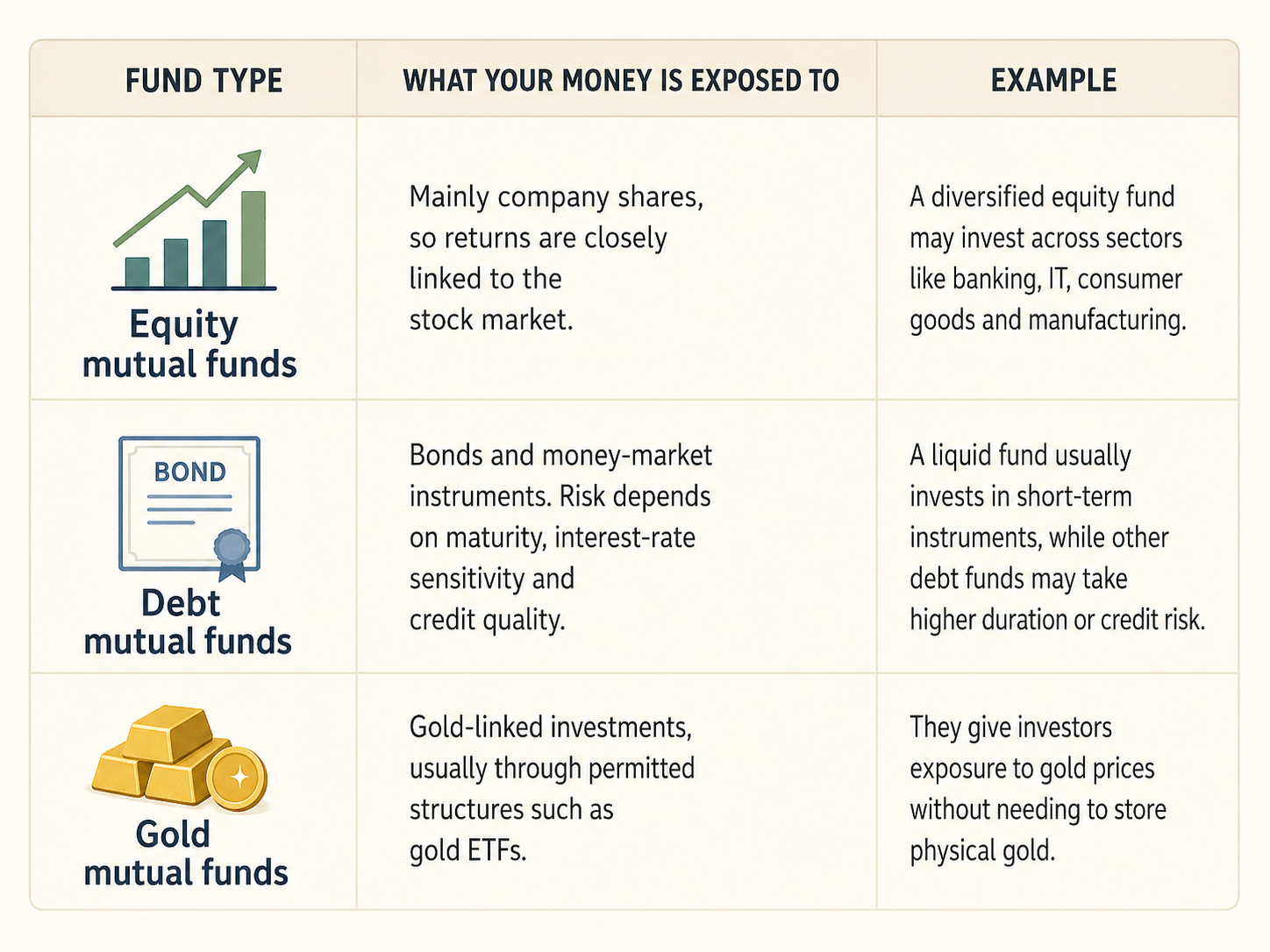
For example, flexi-cap mutual funds can invest across companies of different market capitalisations, giving the fund manager flexibility in allocation.
Mid-cap mutual funds, on the other hand, primarily invest in mid-cap companies. These companies may offer growth opportunities but can also experience greater volatility than larger, more established businesses.
Recent performance can tell you how a fund has performed in the past, but it cannot tell you whether that fund is suitable for your financial goal. Past performance also does not guarantee future returns.
A better starting point is to ask:
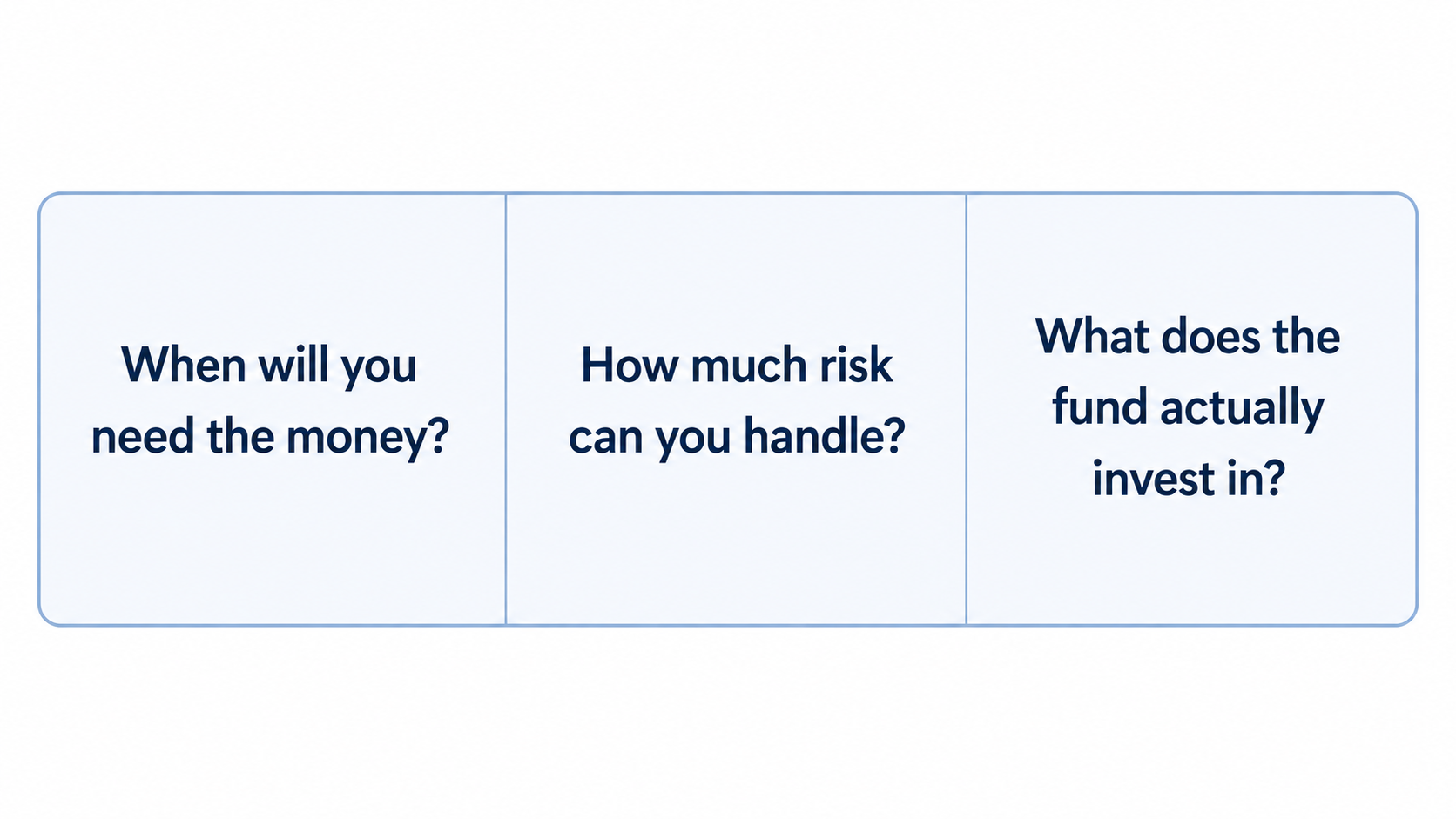
Once the fund matches your goal and risk tolerance, you can move to the practical part: starting your SIP.
Reserve your spot now!
How Do You Start an SIP in a Mutual Fund?
Before investing, complete the required KYC process. Then, three choices matter:
1. Choose Between a Direct and Regular Plan
A direct plan is purchased without a distributor and generally has a lower expense ratio.
A regular plan involves a distributor and includes distributor-related costs, which can make its expense ratio higher.
2. Choose Between Growth and IDCW
Under the growth option, gains remain invested within the scheme and are reflected in its NAV.
Under the Income Distribution cum Capital Withdrawal (IDCW) option, the fund may make distributions when declared.
An IDCW payout should not be treated as an additional return. The scheme’s NAV generally adjusts when a distribution is made, and IDCW payments are not guaranteed.
3. Decide Your SIP Amount
Choose an SIP amount that fits your monthly cash flow. A mutual fund calculator can estimate the monthly SIP needed for a goal, such as ₹10 lakh, using an assumed return, but the result is only an illustration and not a forecast. Once you have chosen the scheme, plan and amount, select the SIP frequency, authorise the bank mandate and start investing.
SIP and Mutual Funds: The Simplest Way to Remember It
A mutual fund decides where your money is invested. An SIP decides how regularly you invest that money.
Before investing, look beyond recent returns and consider the fund’s portfolio, risk, costs, and fit with your financial goal.
To build a deeper understanding of equity markets, investment analysis and valuation, explore SSEI’s CFA and finance courses.
Frequently Asked Questions
1. What is a mutual fund?
A mutual fund pools money from investors and invests it in assets such as shares, bonds or money-market instruments based on the scheme’s objective.
2. How much is a ₹5,000 monthly SIP for 10 years?
You would invest ₹6 lakh in total. At an assumed 12% annual return, it could grow to around ₹11.6 lakh, though actual returns are not guaranteed.
3. How much is a ₹3,000 monthly SIP for 5 years?
Your total investment would be ₹1.8 lakh. At an assumed 12% annual return, it could grow to roughly ₹2.47 lakh.
4. What happens if I invest ₹10,000 in mutual funds?
Your ₹10,000 is used to buy units of the chosen mutual fund at the applicable NAV. Its value then rises or falls with the fund’s performance.
5. Is a mutual fund better than an FD?
Mutual funds are market-linked and carry more risk, while FDs offer more predictable returns. The better option depends on your goal, time horizon and risk tolerance.
Behind every article is the SSEI Team, bringing together educators, finance professionals, and content specialists to make finance easier to understand.
View All Articles